 blog
blog
Meaningful Children's Books for Character: 10 Essential Reads
Table of Contents
- Why Meaningful Children's Books Matter for Character Development
- Character Building Books for Kids: Our Selection Criteria
- Picture Books About Kindness and Compassion
- Children's Books About Empathy and Understanding Others
- Stories of Courage, Confidence, and Resilience
- Meaningful Books in Spanish for Children: Expanding Your Collection
- How to Use These Books: Discussion Prompts and Activities
- Frequently Asked Questions
Last Updated: October 11, 2026
Why Meaningful Children's Books Matter for Character Development
Building character in children happens through children's books for character development and stories. Books teach values in ways that feel natural and engaging. When a child sees a character act with kindness, they understand kindness differently than if you simply told them to be kind.
Meaningful children's books for character work because they show rather than tell. A story about sharing hits deeper than a lecture about generosity. The child connects with the character, experiences the conflict, and learns the lesson through narrative rather than instruction.
Character development through reading starts early. Picture books introduce basic values to toddlers and preschoolers. Chapter books deepen understanding for elementary-age readers. Young adult titles help older kids navigate complex moral questions. Each stage builds on the last.
The right books become part of a child's internal voice. Years later, they'll remember the character who faced fear and acted anyway. They'll think of the friend who chose honesty even when it was hard. These stories stick because they're memorable, emotional, and real.
Character Building Books for Kids: Our Selection Criteria
Not every book teaches character. Some stories entertain without offering deeper meaning. Others feel preachy, turning kids away from the lesson entirely. We selected books using specific criteria to ensure they actually work.
We looked for these qualities:
- Stories that show character traits through action, not through lectures
- Relatable characters facing real conflicts that children understand
- Age-appropriate content that matches reading and emotional development levels
- Diverse families, cultures, and perspectives so every child sees themselves represented
- Authentic emotion and honest endings that don't feel forced or fake
- Stories that invite discussion and reflection without being heavy-handed
Books that meet these standards do something powerful. They normalize healthy behavior. They show that characters struggle, make mistakes, and grow. They demonstrate that doing the right thing matters, even when it's hard.
The best character building books for kids work quietly. A child finishes the story and simply absorbs the lesson. They don't feel taught. They feel like they discovered something themselves.
Picture Books About Kindness and Compassion
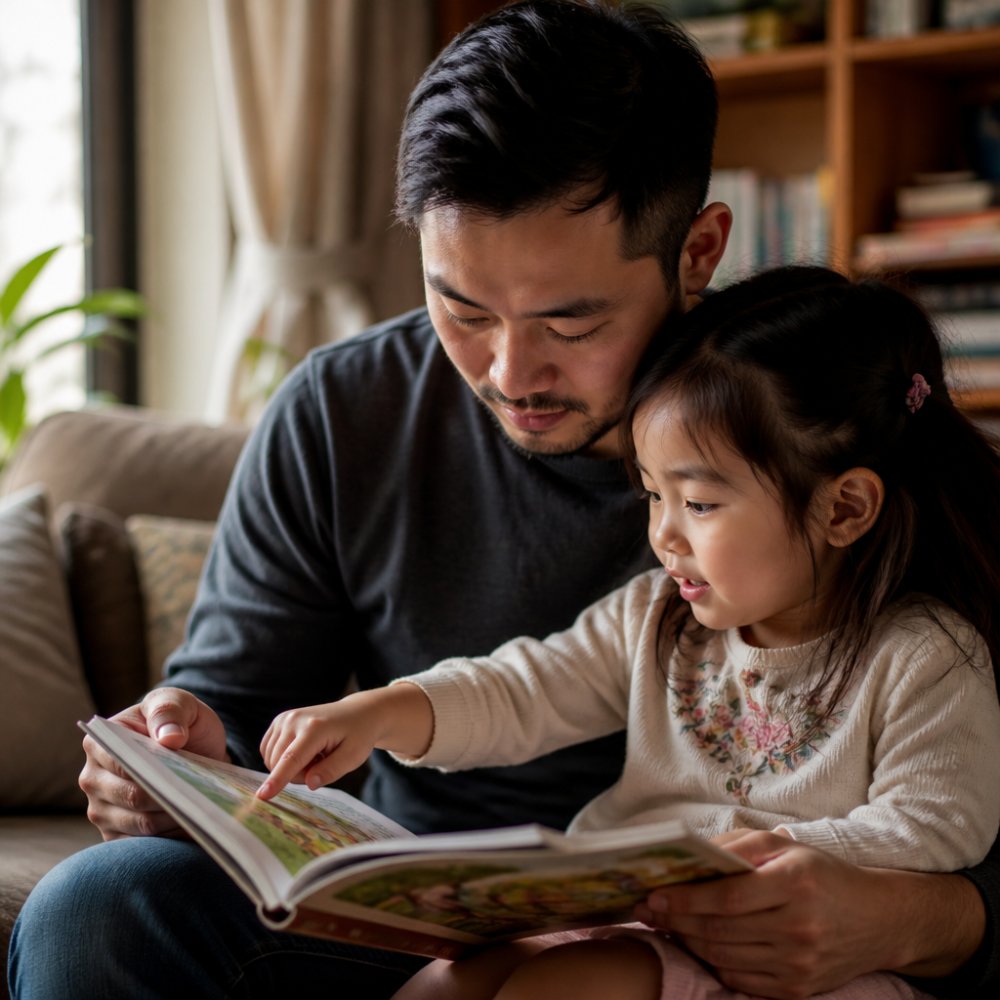
Picture books are where character education begins. Ages 2 to 6 are when children first learn to recognize emotions in others and respond with care. Picture books about kindness show this process in action.
Strong picture books about kindness include stories where:
- A character notices someone who is sad, lonely, or left out
- The character takes action to help, even in small ways
- The helping creates real change and connection
- The story shows how kindness feels to both the giver and receiver
- Illustrations reinforce the emotional content of the text
Recommended titles by age and reading level:
Ages 2-4 (Board books and early picture books, 100-300 words): Look for books with simple, repetitive language and bold illustrations. The Kindness Book (ages 2-4) uses bright colors and straightforward scenarios, a child sharing a toy, helping a friend find something lost.
Ages 4-6 (Picture books, 500-1000 words): At this stage, children understand cause and effect and can follow slightly longer narratives. Books in this range show kindness as a choice with visible consequences. Stories often feature a character who initially acts unkindly, then learns better, normalizing mistakes and growth.
How to choose by situation:
- For a child who struggles with sharing: Select books where a character discovers that sharing creates friendship, not loss. Avoid books that shame the child for not sharing naturally.
- For a child who is socially withdrawn: Choose stories where a quiet or shy character performs a kind act and gains confidence. This validates their personality while showing kindness doesn't require being loud.
- For a child learning to notice others' feelings: Pick books with clear emotional cues in illustrations, sad faces, happy faces, tears, smiles, so the child can name what they see.
Picture books work best when they avoid being saccharine. Children sense when a story is trying too hard to teach a lesson. The most effective books about kindness tell genuine stories about characters who care. The lesson emerges naturally from what happens.
Many parents find that picture books about kindness spark conversations. After reading, a child might say, "I want to help my friend like that." That's when the story has truly worked. It's moved from the page into the child's own thinking.
Children's Books About Empathy and Understanding Others
Empathy is harder than kindness. Kindness is an action. Empathy is the ability to imagine what someone else feels and why they feel it. Children's books about empathy teach this crucial skill.
Stories that build empathy ask children to step into another person's experience. They show situations from multiple perspectives. A child sees how the same event feels completely different depending on who experiences it.
Effective books about empathy include:
- Moments where characters misunderstand each other and then learn the truth
- Situations where a character realizes someone else's feelings are just as real as their own
- Stories showing that people can be different and still deserve respect and friendship
- Narratives where understanding leads to better choices and stronger relationships
- Illustrations that show facial expressions and body language clearly
Books about empathy and understanding others work best when they're honest about difficulty. Real empathy requires effort. It means sitting with uncomfortable feelings. The best stories show characters doing this work and discovering it's worth it.
Children who read books about empathy develop better social skills. They learn to ask questions before judging. They understand that behavior often comes from unmet needs. These are foundational skills for healthy relationships throughout life.
Stories of Courage, Confidence, and Resilience
Children face fears and setbacks. Books about courage show them that fear is normal and that brave people act despite being scared. Confidence and resilience develop when children see characters handle difficulty and come through it.
Stories of courage work because they're honest about fear. The character doesn't suddenly feel brave. Instead, they feel scared and do the thing anyway. That's real courage. Children recognize it and believe they can do it too.
Books about courage, confidence, and resilience typically feature:
- A challenge or fear that feels real to the age group reading
- Internal struggle, not just external obstacles
- A character who tries, fails, learns, and tries again
- Support from others but also personal agency and effort
- An ending that shows growth, not perfection
Resilience is especially important in today's world. Children experience stress, disappointment, and change. Books that show characters bouncing back from setbacks teach a vital skill. They normalize the struggle and celebrate the recovery.
These stories help children develop what researchers call "grit." It's the ability to persist through difficulty. Children who read stories about resilience tend to be more willing to take on challenges and less likely to give up when things get hard.
Meaningful Books in Spanish for Children: Expanding Your Collection
Many families speak Spanish at home or want to build bilingual literacy. Meaningful books in Spanish for children serve both language learning and character development. They also help children see their culture and language reflected in stories.
Spanish-language children's books offer the same quality character education as English titles. Stories about kindness, empathy, courage, and resilience exist in Spanish. They carry the same power to shape how children think and behave.
When selecting meaningful books in Spanish for children, consider:
- Whether the translation preserves the emotional tone of the original
- Books written originally in Spanish by Spanish and Latin American authors
- Stories that reflect diverse Spanish-speaking cultures and families
- Age-appropriate vocabulary that matches your child's language level
- Illustrations that support understanding for emerging readers
Steven A. Yagyagan offers select titles in multiple languages such as English, Spanish, and German, offering families the chance to read meaningful narratives in their home language. When children encounter stories in the language they speak at home, the connection deepens. The story becomes part of their cultural identity, not just entertainment.
Building a Spanish-language collection takes intention. Many mainstream bookstores carry limited Spanish titles. Libraries, Spanish-language bookstores, and online retailers offer wider selection. The effort pays off when a child finds a character who speaks their language and shares their experience.
How to Use These Books: Discussion Prompts and Activities
Selecting the right books is only the first step. How families use these books determines whether they truly shape character. Reading together and talking about what happens transforms a story into a learning experience.
Discussion prompts work best when they're tied to specific situations:
When your child has hurt someone's feelings or acted unkindly:
- "The character in the story made a choice that hurt someone. What do you think they were feeling before they made that choice?"
- "If you could talk to the character, what would you tell them about what happened?"
- "What do you think the other character felt? How could the character make it better?"
These questions help a child who has already misbehaved see themselves in the story without shame. They practice empathy for the person they hurt while also exploring their own motivations.
When your child witnesses unkindness or exclusion:
- "Did you notice when [character] felt left out? What made you notice?"
- "What could someone do to help that character feel included?"
- "Have you ever felt like that character? What helped you feel better?"
These prompts build the skill of noticing others' distress, a prerequisite for empathy and kindness.
When your child faces a challenge or setback:
- "The character was scared/sad/frustrated. What did they do about it?"
- "What was the hardest part for the character? What was the easiest part?"
- "If the character gave up, what would have happened? What actually happened because they kept trying?"
These questions help children see struggle as normal and persistence as a choice, not a personality trait.
When your child is learning to admit mistakes:
- "Why do you think the character didn't tell the truth at first?"
- "What made them decide to tell the truth?"
- "How did people react when the character was honest? Was it what they expected?"
These prompts normalize the fear and difficulty of admitting mistakes while showing that honesty often leads to better outcomes than hiding the truth.
Activities that extend learning beyond the book:
After reading a story about kindness, a child might draw a picture of a kind act they witnessed or want to perform.
These activities help children process the story and apply it to their own experience. They move character development from abstract to concrete.
Create a character-focused reading ritual:
Some families read a book about a specific trait, discuss it at dinner, and challenge themselves to practice that trait during the week.
Track growth without pressure:
Keep a simple record, not a checklist or grade, but a note, of situations where your child showed the trait from the book. "You noticed your friend was sad and asked if they were okay.
The goal isn't perfection. It's building awareness and creating space for growth.
Frequently Asked Questions
What makes a children's book meaningful for character development?
Meaningful children's books for character combine authentic storytelling with clear character traits like kindness, courage, and empathy. They show characters facing real challenges and making thoughtful decisions rather than delivering preachy lessons. Age-appropriate narratives that reflect diverse experiences help young readers recognize themselves in stories while learning values through natural story progression.
How do I choose the right character building book for my child's age?
Consider your child's reading level and emotional maturity. Picture books work best for ages 3-7, introducing simple character concepts through illustrations. Early readers (ages 6-9) benefit from books with relatable scenarios and clear character growth. Older children (ages 9+) engage with more complex narratives exploring friendship, resilience, and decision-making. Look for books that match your child's interests while gently expanding their understanding of character traits.
Can I find quality children's books about empathy in Spanish?
Yes, meaningful books in Spanish for children exist across multiple formats and reading levels. Quality translations preserve the emotional depth and character lessons of original stories. When selecting Spanish-language titles, check that translations maintain authentic voice rather than appearing mechanical. Steven A. Yagyagan offers select titles in multiple languages and formats, allowing families to share character-building stories in their native language.
What discussion prompts work best after reading a character-focused book?
Ask open-ended questions that connect the story to your child's life: 'How would you have handled that situation?' or 'Which character trait did you notice most?' Avoid yes-or-no questions. Instead, encourage reflection: 'What made that choice brave?' or 'How do you think the character felt?' These prompts deepen understanding of character development and help children apply lessons to their own experiences and relationships with others.