 blog
Books Available in Spanish Translation: A 2026 Guide
Table of Contents
- Why Spanish Translation Matters for Readers
- Spanish Edition Books Across Popular Genres
- English-Spanish Bilingual Books for Language Learners
- Spanish Audiobooks and Ebooks: Format Options
- Finding Free Spanish Books Online
- Translation Quality and Edition Comparison
- How to Choose Books Available in Spanish Translation
- Frequently Asked Questions
Last Updated: October 18, 2026
Why Spanish Translation Matters for Readers
Reading in your native language connects you to stories at a deeper level. When books available in Spanish translation open doors for Spanish speakers, they reach narratives they might otherwise miss, whether you're a parent seeking character-building stories, a trauma survivor looking for resilience, or someone exploring spirituality through poetry.
More English-language books are translated into Spanish each year, so classics, contemporary fiction, parenting guides, and spiritual works now reach Spanish-speaking audiences worldwide. The key is knowing where to find quality translations and which formats suit your reading habits.
At Steven A. Yagyagan, our collection includes titles available in Spanish, German, and English across multiple formats, because powerful narratives deserve to reach readers in the language that speaks to their hearts.
Spanish Edition Books Across Popular Genres
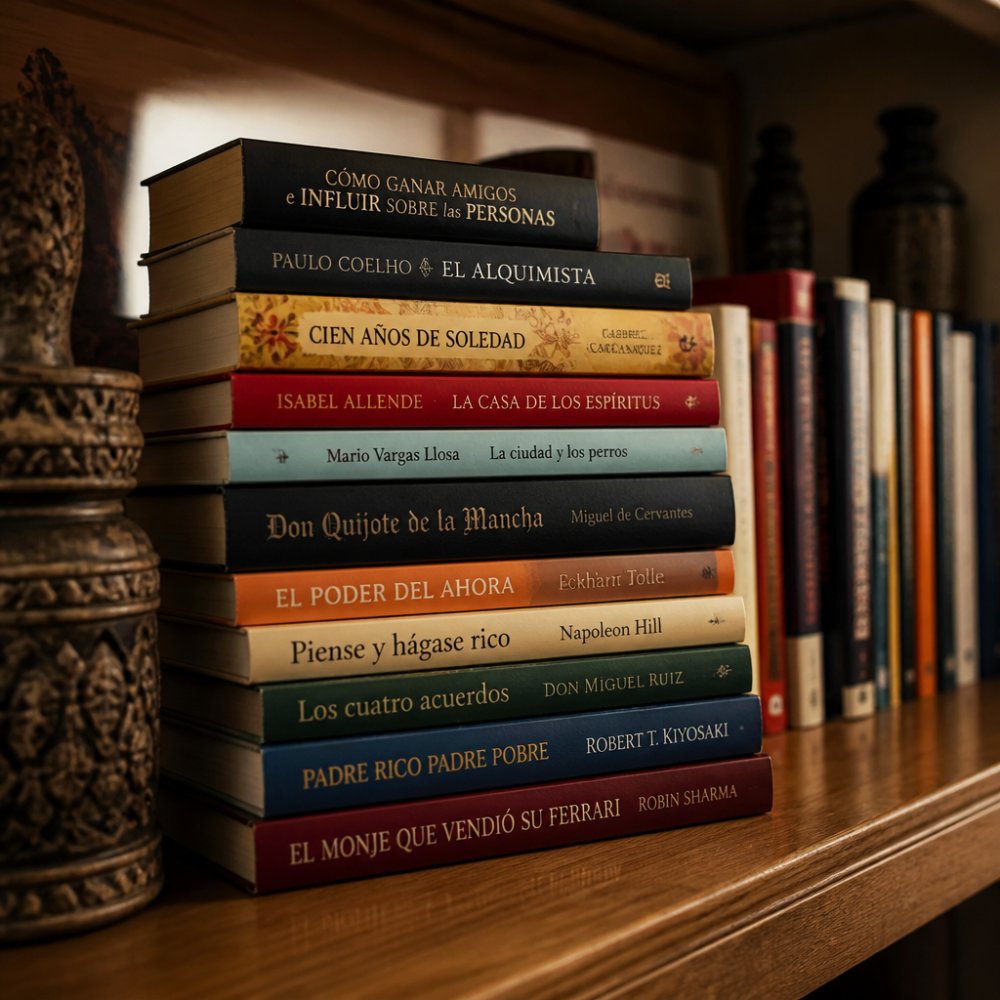
Most search results for books available in Spanish translation mix Spanish-language originals, bilingual materials, and translated English titles. This section focuses on well-known English-language books published in Spanish translation, organized by genre. Availability varies by region and format, so check your local library, retailer, or publisher catalog for the current edition.
Fiction and Contemporary Narratives
Literary and contemporary fiction is the richest category for Spanish translations. Readers can find Spanish editions of many modern classics and book-club favorites:
- The Alchemist by Paulo Coelho (Spanish title: El alquimista), originally written in Portuguese but widely read in English and Spanish; a common entry point for readers exploring translated fiction.
- The Kite Runner by Khaled Hosseini (Cometas en el cielo), contemporary fiction with strong translation availability.
- Life of Pi by Yann Martel (Vida de Pi), literary fiction with a Spanish edition from major publishers.
English bestsellers often have multiple Spanish editions from different publishers; comparing translator and publication date helps you choose one matching your preferred regional Spanish.
Mystery, Thriller, and Crime
Genre fiction has strong Spanish translation coverage because publishers know there is steady demand:
- The Girl with the Dragon Tattoo by Stieg Larsson (Los hombres que no amaban a las mujeres), crime fiction with a well-known Spanish edition.
- Gone Girl by Gillian Flynn (Perdida), thriller with a Spanish translation widely stocked by retailers.
- The Da Vinci Code by Dan Brown (El código Da Vinci), commercial thriller with broad Spanish availability.
For mystery readers, note that Spanish editions sometimes change the title significantly. Searching by author name plus "en español" is often more reliable than searching by the English title.
Romance and Women's Fiction
Romance is one of the fastest-growing categories for Spanish translation, driven by online retailers and digital publishing:
- The Notebook by Nicholas Sparks (El cuaderno de Noah), romance with a Spanish edition.
- Me Before You by Jojo Moyes (Yo antes de ti), contemporary romance widely available in Spanish.
- Bridgerton series by Julia Quinn, Spanish editions have gained visibility alongside the television adaptation.
Romance readers should check whether an edition is a direct translation or a Spanish-language original; the distinction matters if you specifically want translated English titles.
Fantasy and Science Fiction
Speculative fiction has a dedicated Spanish readership, and major series are usually translated:
- The Hobbit by J.R.R. Tolkien (El hobbit), a classic with multiple Spanish editions.
- The Lord of the Rings (El señor de los anillos), available in Spanish, though translation quality and terminology vary by edition.
- Harry Potter series by J.K. Rowling, Spanish editions are widely available, with regional differences in vocabulary between Spain and Latin America.
- Dune by Frank Herbert (Dune), science fiction with Spanish editions from major publishers.
Translation choices are most visible in speculative fiction: invented terms, character names, and world-building vocabulary differ between editions, so readers who care about consistency should stick to one publisher's series.
Nonfiction, Memoir, and Self-Help
Nonfiction translations are abundant, especially in self-help, business, and memoir:
- Educated by Tara Westover (Una educación), memoir with a Spanish edition.
- Becoming by Michelle Obama (Becoming: Mi historia), memoir widely available in Spanish.
- Atomic Habits by James Clear (Hábitos atómicos), self-help with strong Spanish translation availability.
- The 7 Habits of Highly Effective People by Stephen Covey (Los 7 hábitos de la gente altamente efectiva), a long-standing Spanish translation.
Nonfiction translations tend to be more literal than literary fiction, which makes them a good starting point for readers building confidence in Spanish.
English-Spanish Bilingual Books for Language Learners
Bilingual books tell engaging stories while building vocabulary and comprehension, serving children learning Spanish, Spanish speakers learning English, and families maintaining bilingual households.
Bilingual books typically feature:
- English text on one page, Spanish on the facing page
- Parallel narratives that reinforce each other
- Vocabulary support through context and repetition
- Illustrations that aid comprehension
For Spanish learners, bilingual books offer a gentler entry point than reading entirely in Spanish, and the same approach works in reverse for Spanish speakers learning English.
Effectiveness depends on reading level: beginners benefit from simpler vocabulary and shorter sentences, intermediate readers can tackle more complex narratives, and advanced learners use bilingual books as a bridge to reading entirely in their target language.
Spanish Audiobooks and Ebooks: Format Options
Books available in Spanish translation now come in multiple formats beyond traditional paperbacks. Audiobooks, ebooks, and digital editions expand access and fit different reading habits.
Audiobooks in Spanish:
- Professional narration brings stories to life
- Useful for commutes, exercise, or multitasking
- Help with pronunciation and listening comprehension
- Ideal for those with visual impairments
Ebooks and Digital Editions:
- Instantly available without shipping delays
- Searchable text for vocabulary lookup
- Adjustable font sizes for readability
- Often more affordable than print editions
Many independent authors, including Steven A. Yagyagan, publish across all three formats, so readers can engage with stories however suits their lifestyle, an audiobook on the commute, an ebook before bed, a paperback shared with family.
Digital formats also solve a practical problem: Spanish books aren't always stocked in local bookstores. Ebooks and audiobooks deliver instantly to any device with an internet connection.
Finding Free Spanish Books Online
Budget constraints shouldn't prevent access to meaningful stories. Several legitimate sources offer free Spanish books online, from classic literature to contemporary works.
Free Spanish book sources:
- Project Gutenberg (thousands of public domain books)
- Open Library (lending program for digital books)
- Library apps (many public libraries offer free ebook access)
- Author websites (some authors offer free first chapters or complete works)
Public libraries deserve special mention: most offer free digital lending through apps like Libby or OverDrive, and many carry significant Spanish-language collections, though selection varies by system.
Project Gutenberg excels for classic literature: thousands of pre-1928 public domain books are free in Spanish, including foundational Spanish and Latin American works alongside translated classics.
Translation Quality and Edition Comparison
Two Spanish editions of the same English book can read very differently, shaped by translation quality, regional vocabulary, and editorial choices. Here is a concrete method for choosing between available Spanish translations.
Why Multiple Spanish Editions Exist
A single English title may have several Spanish editions because different publishers hold rights in different regions or periods. A Spain edition may use vosotros and peninsular vocabulary, while a Latin American edition uses ustedes and different colloquialisms. Neither is inherently better; the right choice depends on where you learned Spanish or plan to use it.
Common patterns:
- Spain editions often use vosotros, coger in everyday senses, and vocabulary like ordenador for computer.
- Latin American editions typically use ustedes, avoid vosotros, and prefer vocabulary like computadora.
- Neutral Spanish editions aim for broad comprehension but can feel less natural to readers from any single region.
What to Check Before You Buy
A practical comparison checklist:
- Translator name, Established literary translators have recognizable bodies of work. If the translator has translated other books you liked, that is a useful signal.
- Publication date, Newer editions sometimes reflect updated translations, but not always. A 1990s translation may still be the standard edition.
- Publisher, Major Spanish-language publishers and international houses with Spanish imprints typically invest more in editing and proofreading.
- Edition notes, Some publishers state whether the translation is unabridged, adapted, or based on a specific English edition.
- Reader reviews in Spanish, Reviews written by native Spanish speakers often mention translation flow, regional vocabulary, and typographical quality more specifically than English-language reviews.
- Sample pages, Most ebook retailers offer a free sample. Reading the first few pages is the fastest way to judge whether the Spanish feels natural to you.
Regional Spanish: A Practical Example
Consider a popular young adult series translated for both Spain and Latin America: the Spain edition may use vosotros and peninsular slang, while the Latin American edition uses ustedes and different slang. A reader in Mexico may find the Spain edition slightly foreign, and vice versa. For learners, neutral or Latin American editions are often recommended because they align with the Spanish taught in most U.S. and international classrooms.
Translation Quality by Genre
Translation demands vary by genre:
- Literary fiction and poetry require translators who can preserve voice, rhythm, and ambiguity. These translations are the hardest to evaluate quickly, so translator reputation matters most.
- Genre fiction (mystery, romance, thriller) prioritizes pacing and readability. A competent, fluent translation is usually sufficient.
- Nonfiction and self-help tend to be more literal and are the most forgiving category for readers comparing editions.
- Children's books often use simpler vocabulary and shorter sentences, making them a good entry point for learners and for comparing regional vocabulary.
A Note on Adapted and Abridged Editions
Some Spanish editions are adapted for younger readers or language learners, simplifying vocabulary, shortening sentences, or reducing length. They can help learners but are not full translations; check the edition description for terms like adaptación, versión abreviada, or edición juvenil if you want the complete text.
How to Choose Books Available in Spanish Translation
Start with these questions:
What's your Spanish reading level?
What genres resonate with you? Fiction exploring resilience appeals to trauma survivors.
Do you prefer print, digital, or audio?
Is translation quality critical? Literary fiction and poetry demand skilled translators.
Should you start with established authors or independent writers?
Consider reading reviews specifically mentioning the Spanish translation.
Finding books available in Spanish translation opens doors to stories that might otherwise remain closed, whether you're building your child's character through shared reading, seeking resilience narratives after trauma, or exploring spirituality through poetry.
Steven A. Yagyagan's multilingual collection demonstrates that meaningful stories deserve to reach readers across language barriers.
Frequently Asked Questions
What are some popular books available in Spanish translation?
Many classic and contemporary works have quality Spanish translations, including fiction, poetry, parenting guides, and spiritual narratives. Popular categories include children's books, young adult fiction, memoirs exploring resilience, and poetry collections. Translation quality varies by publisher and translator, so checking reader reviews and edition details helps identify versions that best match your reading level and interests. Steven A. Yagyagan's works, for example, span multiple genres with Spanish editions available across formats.
What is the difference between a Spanish translation and a bilingual book?
A Spanish translation is a complete book rewritten in Spanish, intended for native or fluent Spanish speakers. A bilingual English-Spanish book presents both languages side-by-side on the same page, designed for language learners or families raising bilingual children. Bilingual books typically use shorter sentences and simpler vocabulary to support language acquisition. Choose translations for fluent readers seeking immersion; choose bilingual books if you want to learn Spanish or share reading with children developing bilingual skills.
How can I find out whether a book has a Spanish translation?
Search the book title plus 'Spanish translation' or 'edición en español' on bookseller websites like Amazon, which filter by language. Check publisher websites directly, as many list available translations by title. Library catalogs and WorldCat allow language filtering. For independent and self-published authors like Steven A. Yagyagan, visit the author's official website to see which titles have Spanish editions available. Reading reviews often mentions translation quality and availability across formats like paperback, ebook, or audiobook.