 blog
How to Choose German Language Poetry Collections
Last Updated: October 28, 2026
Quick Summary
The best german language poetry collections for most readers are short, well-edited anthologies that show several poets at once. Check who edited the book, how the poems were selected, and whether the German sits beside an English translation.
- Choose a survey anthology for breadth or a single poet's selected works for depth.
- Absolute beginners should start with bilingual anthologies pairing short poems with line-by-line English.
- Facing-page editions let you read the German first, then check the translation.
- Read the same poem in two translations to judge which edition keeps the original's feeling.
- Always read a sample and confirm the book includes German text before buying.
Table of Contents
- Which German Poetry Collections Are Worth Reading First
- German Poetry Books for Beginners and Language Learners
- Bilingual Editions and German Poetry in Translation
- Classic German Poetry Anthologies From Romanticism to the Twentieth Century
- Contemporary German Poetry Worth Your Time
- Comparing Editions: Translator, Format and Coverage
- Choosing Your Next German Poetry Collection and Where to Start Reading
- Frequently Asked Questions
Which German Poetry Collections Are Worth Reading First
Choosing German language poetry collections can feel overwhelming, because the field stretches from medieval verse to today's newest voices. Most readers do best by starting with a short, well-edited anthology that shows several poets at once. Those books give you a map before you commit to a single author.
A useful rule: pick a collection that tells you clearly who edited it, how the poems were selected, and whether the German text sits beside an English translation. Those three details predict how much you will enjoy the book.
Start with a collection that matches your goal. If you want breadth, choose a survey anthology. If you want depth, choose one poet's selected works. Avoid starting with a massive volume that tries to cover everything, since you will lose momentum before you reach the good parts.
German Poetry Books for Beginners and Language Learners
Beginners face a real fork in the road: read German poetry in the original, rely on English translation, or use a facing-page bilingual edition that lets you do both. The right choice depends less on talent than on how much scaffolding the book provides. A short poem by Heinrich Heine or a simple nature lyric by Eduard Mörike can work at an intermediate level, while dense philosophical verse by Friedrich Hölderlin or Paul Celan usually requires a translation alongside the German even for advanced learners.
A practical shortlist for different starting points:
- Absolute beginners (A1-A2 German): Start with a bilingual anthology that pairs very short poems with line-by-line English. Look for collections that include folk songs, simple Romantic lyrics, and children's verse, these use concrete vocabulary and repetition. Avoid any volume that presents Celan, Hölderlin, or Expressionist poetry without extensive notes.
- Intermediate learners (B1-B2): A facing-page edition of selected Romantic poetry works well because the German is often regular in meter and the English translation sits directly opposite. Read the German first, then check the translation, then reread the German aloud.
- Advanced readers (C1+): German-only editions with editorial notes become viable. Choose a single-poet selected volume rather than a sprawling anthology so you can track that poet's vocabulary and style across many poems.
Features that separate learner-friendly editions from academic ones:
- Line-by-line glossaries or footnotes for archaic and dialect words
- A facing English translation you can cover with a card and reveal only after attempting the German
- Modern spelling and punctuation rather than diplomatic transcriptions of manuscripts
- An introduction written for general readers, not specialists
- Audio access or companion recordings, hearing a poem read aloud helps with rhythm and stress, which grammar study rarely teaches
A reading method that most learners find effective: choose one short poem, read the German silently once, read it aloud once, check the translation, then read the German aloud again. Keep a notebook for words that recur across poems, common verbs, prepositions, and nature nouns appear again and again in lyric poetry, and seeing them in verse helps them stick better than isolated vocabulary lists. Two or three poems a week is a sustainable pace; grinding through a grammar book rarely builds the same feel for German syntax.
One caution: many anthologies marketed as "German poetry" are English-only translations with no German text at all. They are excellent for literary enjoyment but useless for language learning. Check the table of contents and a sample page before buying so you know which format you are getting.
Bilingual Editions and German Poetry in Translation
Bilingual editions place the German original on one page and an English translation on the facing page. This format suits readers who want to check nuance without losing their place. It also lets you see how a translator handled rhythm, rhyme, and tone, which often differ sharply between languages.
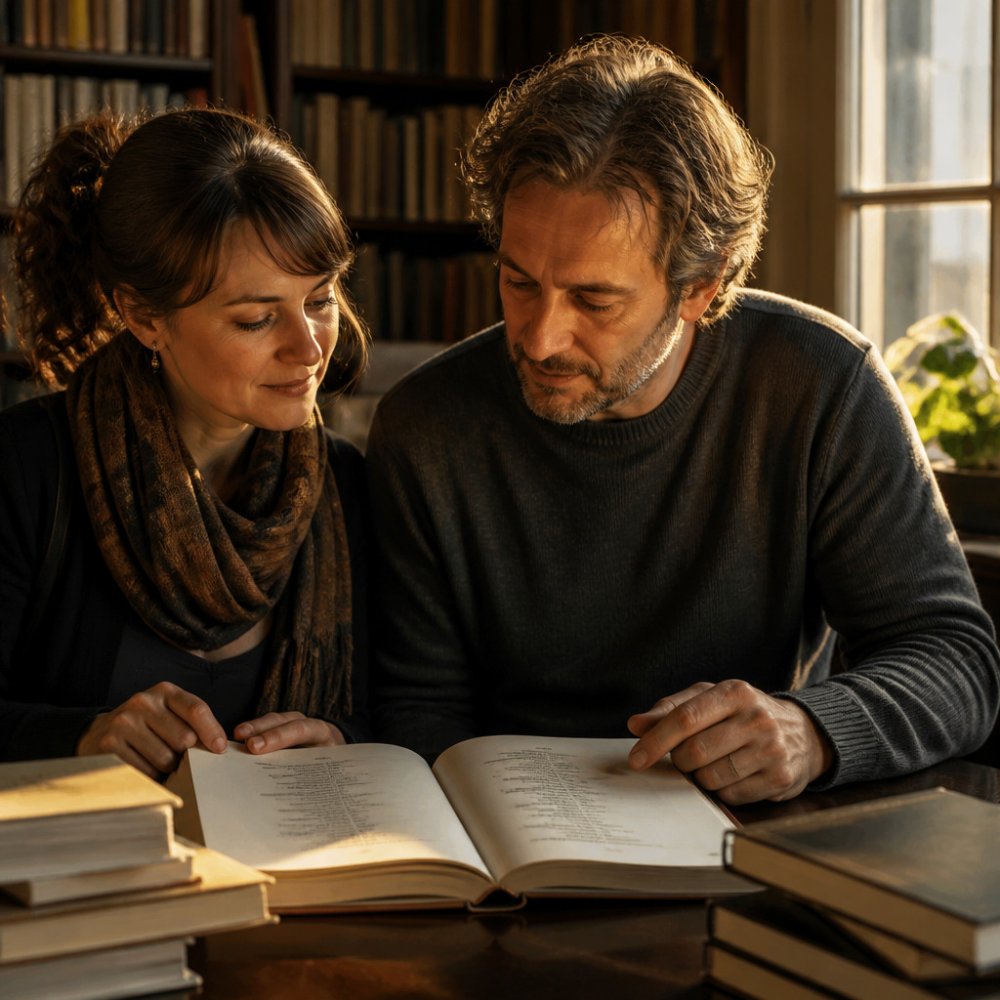
Translation is never a perfect copy. A good translator makes choices about meaning, sound, and cultural context, and two translators may render the same line in very different ways. When comparing editions, read the same poem in two versions. You will quickly notice which translation keeps the feeling of the original and which one simply reports its content.
Anyone curious about translated work can also find meaningful literature in other languages. Our guide to meaningful books in Spanish shows how bilingual reading works across languages, and the list of books available in Spanish translation points to more titles worth comparing.
Classic German Poetry Anthologies From Romanticism to the Twentieth Century
Classic anthologies trace German poetry through its major periods. Romanticism brought intense interest in nature, memory, and the inner life, while the twentieth century brought experiments with form and a sharp turn toward political and personal crisis. A good anthology lets you see that arc without reading a dozen separate books.
Romantic Poetry and Reverie
Romantic poetry in German often centers on longing, the night, and the wandering self. Readers drawn to reverie tend to enjoy these poems because they reward slow reading. Look for an anthology that includes a strong selection of Romantic lyrics and a brief introduction explaining the period's concerns.
Twentieth-Century Poets
The twentieth century is where many readers encounter the most varied voices. Collections covering this era usually show many styles, from strict traditional forms to open, fragmentary verse. Choose an anthology that gives each poet enough space to be understood rather than sampled once.
Contemporary German Poetry Worth Your Time
Contemporary German poetry is alive and varied, and it is easier to find than many readers expect. Recent collections often blend personal experience with questions about language, migration, and identity. Many are published in small presses, so check the publisher's catalog and read sample poems before buying.
When judging a contemporary collection, ask whether the poems hold up on a second reading. A strong book rewards return visits. Also check whether the translator is credited clearly, since contemporary translations vary a great deal in quality.
Comparing Editions: Translator, Format and Coverage
Most readers compare German poetry collections by cover and title, but the edition details matter more than the poems selected. Three variables, translation format, translator, and editorial apparatus, determine whether a book suits you. The table below gives a structured way to compare any two editions side by side.
| Feature | German-only edition | Facing-page bilingual | English-only translation |
|---|---|---|---|
| Best for | Advanced readers, scholars | Learners, readers who want nuance | Readers who want the poem's effect without German |
| Language challenge | Full German, no support | German with immediate English check | None, English only |
| Rhythm and sound | Original meter and rhyme intact | Original visible; translation may sacrifice form | Translator's choices replace the original |
| Editorial notes | Often extensive (scholarly) | Usually moderate | Often minimal |
| Typical use | Literary study | Language learning, close reading | General reading, book clubs |
Translator. The translator's name is the single best predictor of what you will get. Some translators prioritize literal accuracy and annotate heavily; others recreate rhyme and meter and accept looser meaning. When two editions of the same poet exist, read the same short poem in both. You will quickly notice which translation keeps the feeling of the original and which one simply reports its content. Check whether the translator has published other translations from German, a track record suggests consistency.
Format. A thin paperback with a facing translation often teaches you more than a thick volume with no translation at all. Bilingual editions let you check nuance without losing your place and show you how a translator handled rhythm, rhyme, and tone, choices that differ sharply between languages. German-only editions reward readers who already have enough vocabulary to read without constant interruption.
Coverage. Ask whether the book covers one poet, one period, or many. A single-poet selected volume lets you track that poet's development; a period anthology lets you see an arc. Neither is better, they answer different questions. For a first purchase, a period anthology with a clear editor's introduction usually gives more context per page.
Editor's notes. A good introduction explains selection choices and difficult words. Look for notes on archaic vocabulary, dialect, and historical references. Academic editions often include variant texts and bibliography; trade editions usually include only a short preface. Match the apparatus to your goal, study or pleasure.
Sample poems. Always read a sample before buying. Many publishers post the first ten pages online. Read one poem in the format you are considering and ask whether you would enjoy forty more pages of it.
Edition and availability details also matter: check whether the book is in print, whether a newer edition revised the translations, and whether the publisher offers an e-book with searchable German text. These practical points rarely appear in reviews but affect how usable a collection is day to day.
Choosing Your Next German Poetry Collection and Where to Start Reading
Pick one anthology that covers a period you already like, then read one poet in depth before moving on. Set a small goal, such as one poem a day or one collection a month, so the reading stays enjoyable rather than becoming a chore.
For a practical method to narrow your choices, see our guide on how to find meaningful literature. It walks through a simple process for matching a book to your goals, language level, and reading time.
Your next step is to choose one collection from this list, read its first ten poems, and decide whether to continue. Start small, stay curious, and let the poems set the pace.
Frequently Asked Questions
What are some good German poetry books?
Good starting points include anthologies that cover several periods, so you can see how German-language verse changed over time. Look for collections that include the original German text with notes or introductions, and for editions that name the translator. Selections of Romantic and twentieth-century poets are widely available, and many contemporary collections are published in both German and English. Choose based on whether you want a broad overview, a single poet, or a book you can read alongside a translation.
Which German poetry collection is best for beginners?
For beginners, a bilingual edition with the German text on one side and an English translation on the other is usually the most practical choice. Short-form poems and collections with clear introductions help you build confidence before tackling longer works. Check whether the book includes notes on vocabulary or historical context. Reading a poem first in English and then in German can make the original language easier to follow over time.
Are German poetry collections available in English translation?
Many German poetry collections are available in English translation, including classic anthologies and some contemporary titles. Translations vary in how closely they follow the original meter, rhyme and tone, so compare more than one version of a poem if you can. Bilingual editions make it easy to check the translation against the German. Availability changes over time, so confirm current editions with your bookseller or library before buying.
What are some notable contemporary German poetry collections?
Contemporary German poetry includes collections that deal with memory, migration, language and everyday life, and many are published with translations for English-language readers. When choosing one, look at the publication date, the translator and whether the edition includes the original German. Reviews from literary magazines and reader communities can help you judge whether a collection suits your interests. Start with one or two titles to see which voices you respond to most.